 AMPROTEQ
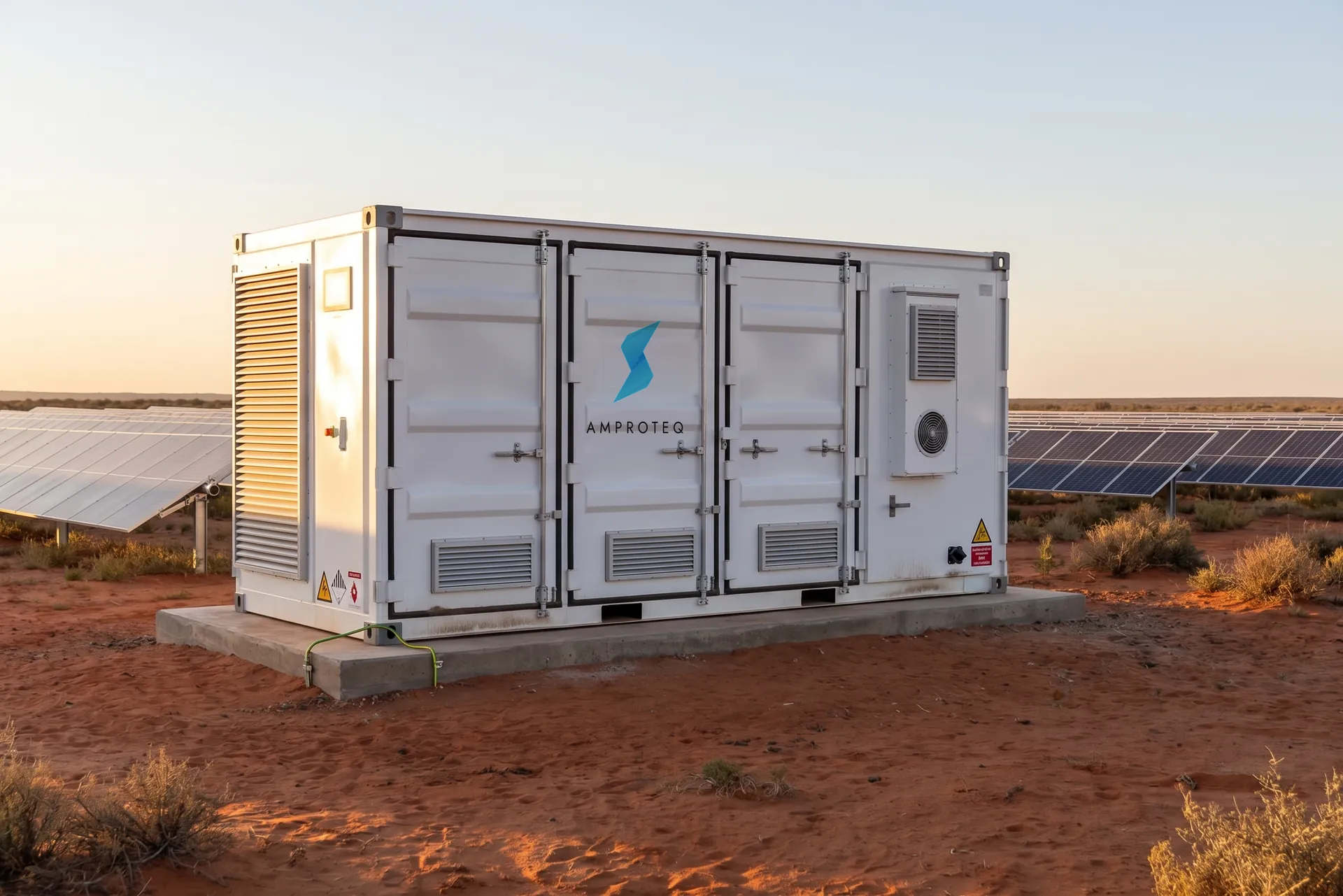
Visualisation
Solutions · Solar self-consumption
Solar self-consumption.
Solar produces most when sites need it least. Without storage, the midday surplus is exported for a fraction of the import price, or curtailed by an export limit. With storage, it runs the site into the evening.
01 · How it works
Four steps,
every day.
- 01Solar firstEvery kilowatt-hour generated on site is used on site before anything is imported or exported.
- 02Store the surplusMidday surplus charges the battery instead of leaving the site.
- 03Release it in the eveningStored solar covers the late afternoon and the evening peak, when the import price is highest.
- 04Firm the profileShort cloud dips are smoothed, so the site sees a steadier supply.
02 · The numbers
What decides
the value.
| Value of a stored kWh | The import price it avoids, rather than the export credit it would have earned |
| Illustrative 2026/27 gap | About R0.80 credited for export against R2.75 paid for import (site-specific) |
| Export limits | Many municipal connections cap or forbid export |
| Pairs with | Peak shifting on the same battery |
03 · Questions
Asked before
the first meeting.
Is storing solar better than exporting it?
Usually, where the export credit is well below the import price or export is capped. The difference per kilowatt-hour is the value of storage, less round-trip losses.
Do we need new solar to add a battery?
No. Storage can be added to an existing array, and Solaris dispatches both.
How big should the battery be relative to the array?
Large enough to absorb the typical daily surplus without sitting idle. The load study sizes both against your interval data.
Where it matters most
Sectors that use it.

Next step
Start with your meter data.
Twelve months of interval data, your tariff schedule and your notified maximum demand are enough for a first sizing, an indicative capex and a PPA rate, within five working days, at no cost.