 AMPROTEQ
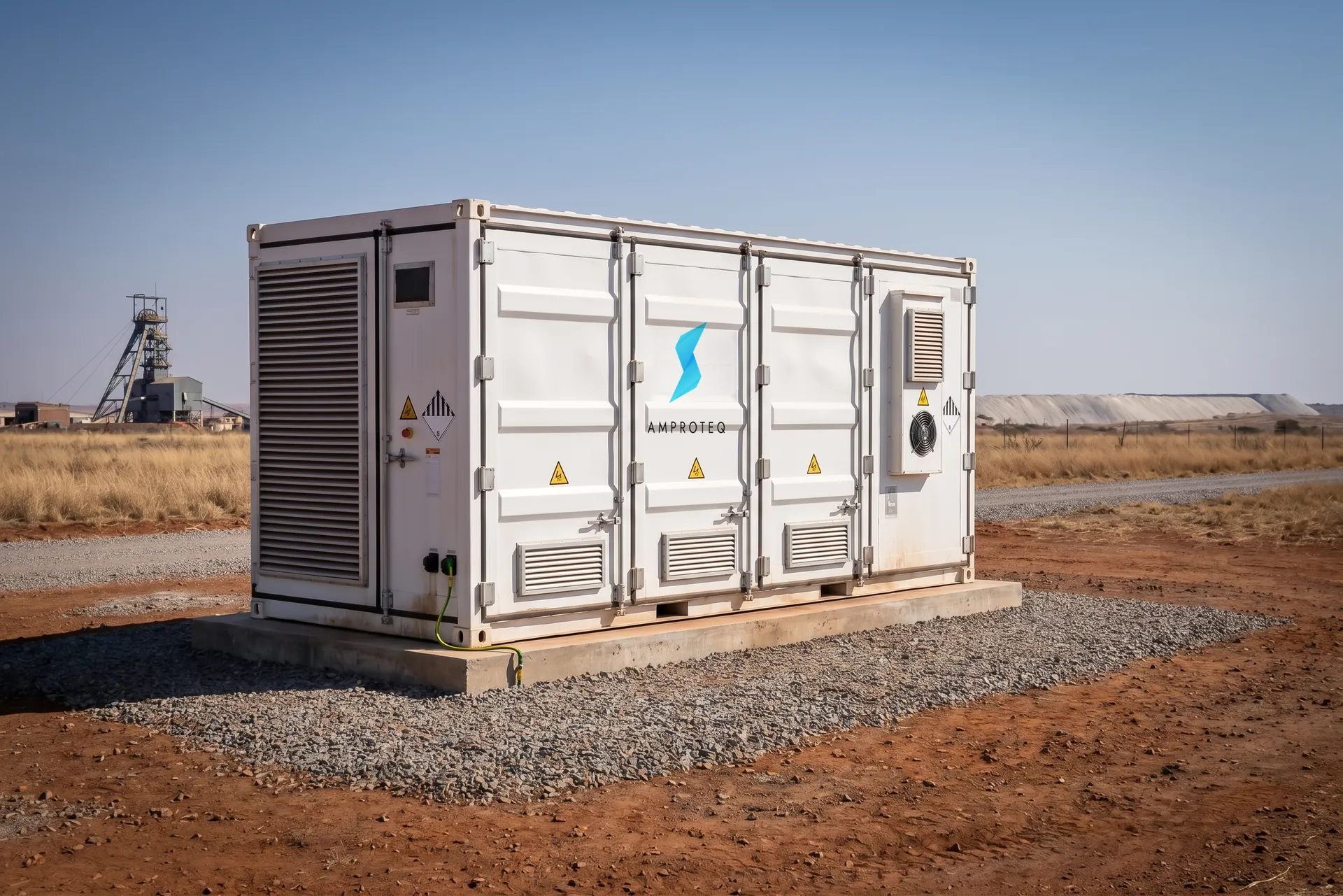
Visualisation
Solutions · Diesel displacement
Diesel displacement.
Generators are an expensive way to make a kilowatt-hour. With a battery carrying the base load, they become what they should be: emergency backup, run rarely and at a good load.
01 · How it works
Four steps,
every day.
- 01Battery first in an outageThe battery carries the site; the generator starts only when the reserve calls for it.
- 02Run gensets at their best loadWhen a genset does run, it runs near its efficient load and charges the battery, instead of idling.
- 03Fewer starts, fewer hoursFewer starts and run hours mean less fuel, less maintenance and longer generator life.
- 04Solar into the mixOn hybrid sites, stored solar cuts fuel burn further.
02 · The numbers
What decides
the value.
| Fuel cost per kWh | Diesel price per litre ÷ about 3 to 3.5 kWh per litre at good load |
| Low-load running | Lightly loaded gensets burn more fuel per kWh and wear faster |
| Dispatch order | Solar, storage, grid, then generator |
| Transfer | Under 10 ms with a static transfer switch |
03 · Questions
Asked before
the first meeting.
Will we still need our generators?
For long outages, usually yes. The battery takes the daily and short events; the generator remains the long-duration backup.
How much fuel does it save?
It depends on how often and how long the site runs on diesel today. The load study models it from your outage and fuel records.
Can the generator charge the battery?
Yes, and Solaris runs it at an efficient load while it does.
Next step
Start with your meter data.
Twelve months of interval data, your tariff schedule and your notified maximum demand are enough for a first sizing, an indicative capex and a PPA rate, within five working days, at no cost.