 AMPROTEQ
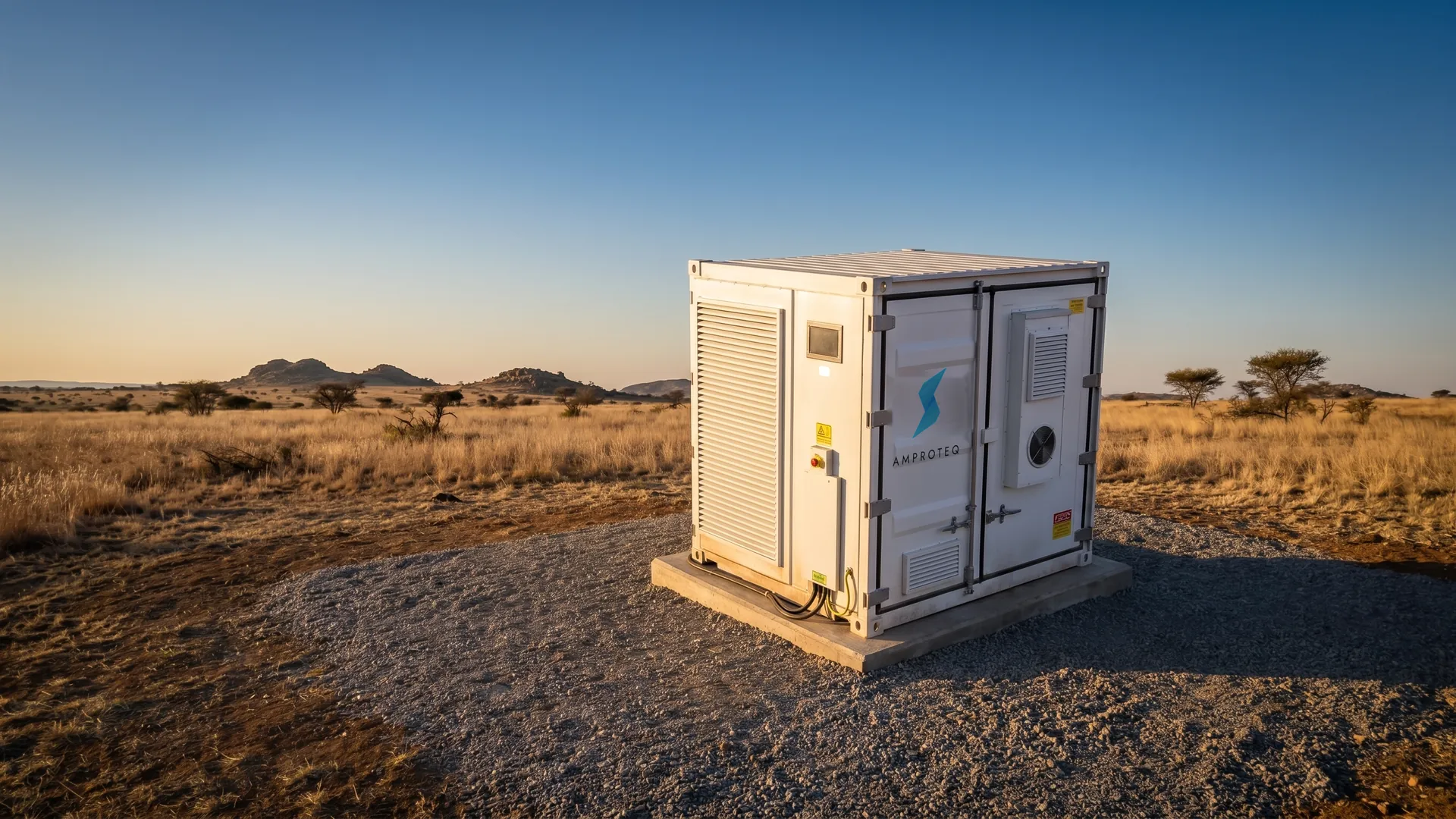
Visualisation
Solutions · Peak shifting
Peak shifting.
Buy energy when it is cheap, use it when it is expensive. On a time-of-use tariff the battery charges off-peak and carries the site through the peak windows.
01 · How it works
Four steps,
every day.
- 01Charge off-peakOvernight and at weekends, when energy is cheapest, or from surplus solar at midday.
- 02Discharge in the peaksIn the high-demand season (June to August) the weekday peaks run 06:00–08:00 and 17:00–20:00; for the rest of the year 07:00–09:00 and 18:00–21:00 (Eskom Megaflex and Miniflex, 2026/27).
- 03Price all twelve monthsThe gap between peak and off-peak prices is far wider in the high-demand season than in the rest of the year, so a winter-only estimate overstates the saving. We price every month.
- 04Size to the peak energyCapacity follows the energy used in the peak windows; power follows the highest half-hour in them.
02 · The numbers
What decides
the value.
| What sets the saving | Energy moved out of the peaks × (peak price − off-peak price ÷ round-trip efficiency) |
| Round-trip efficiency | ≥ 88 % AC to AC, system level |
| Typical duration | 2 hours; 4 hours for long evening peaks |
| Tariffs | Megaflex, Miniflex, WEPS and municipal time-of-use |
03 · Questions
Asked before
the first meeting.
How much does peak shifting save?
Roughly the energy moved out of the peak windows multiplied by the price gap, less round-trip losses, summed over twelve months. The Savings Studio runs this on your bill; the load study runs it on your interval data.
Why not just size for the winter peaks?
Because the price gap is much smaller outside June to August. A model priced on the high-demand season alone can overstate the annual saving by a factor of two or more.
Does peak shifting wear the battery out?
One full cycle a day is the design duty. At that duty the measured data shows about 80 % state of health in year 11 and 70 % in year 19.
Where it matters most
Sectors that use it.

Next step
Start with your meter data.
Twelve months of interval data, your tariff schedule and your notified maximum demand are enough for a first sizing, an indicative capex and a PPA rate, within five working days, at no cost.