 AMPROTEQ

Visualisation
Solutions · Backup & islanding
Backup & islanding.
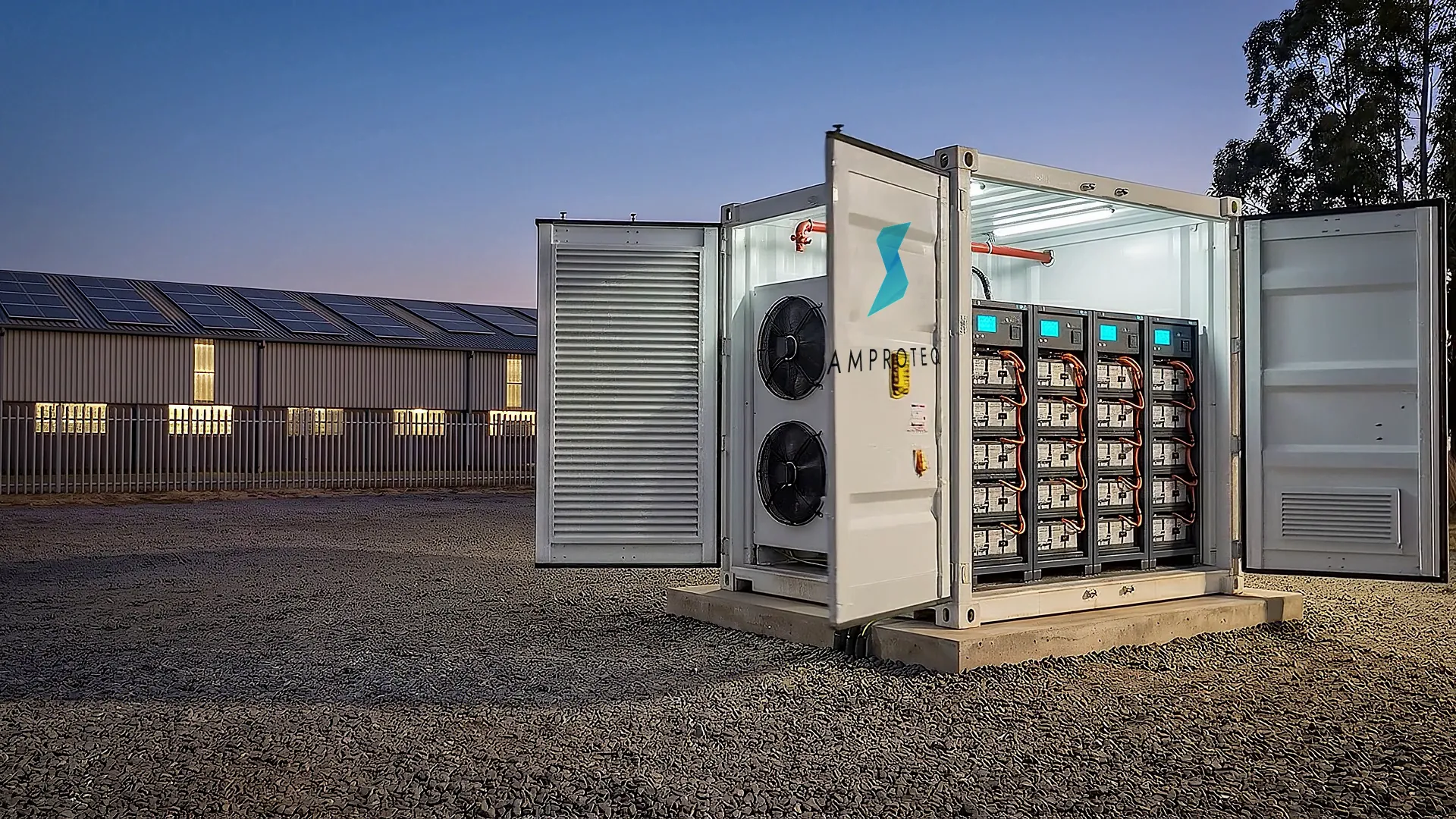
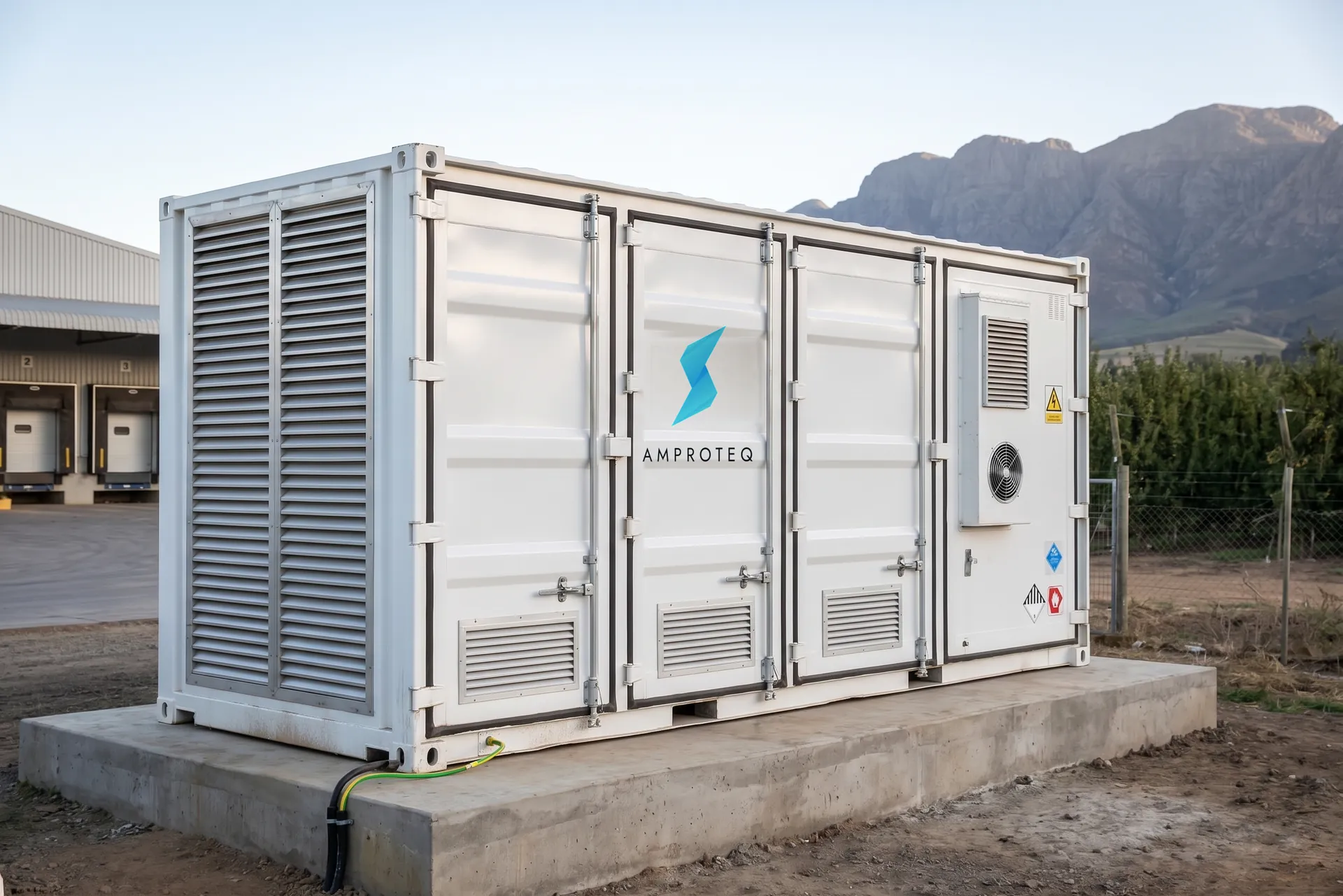
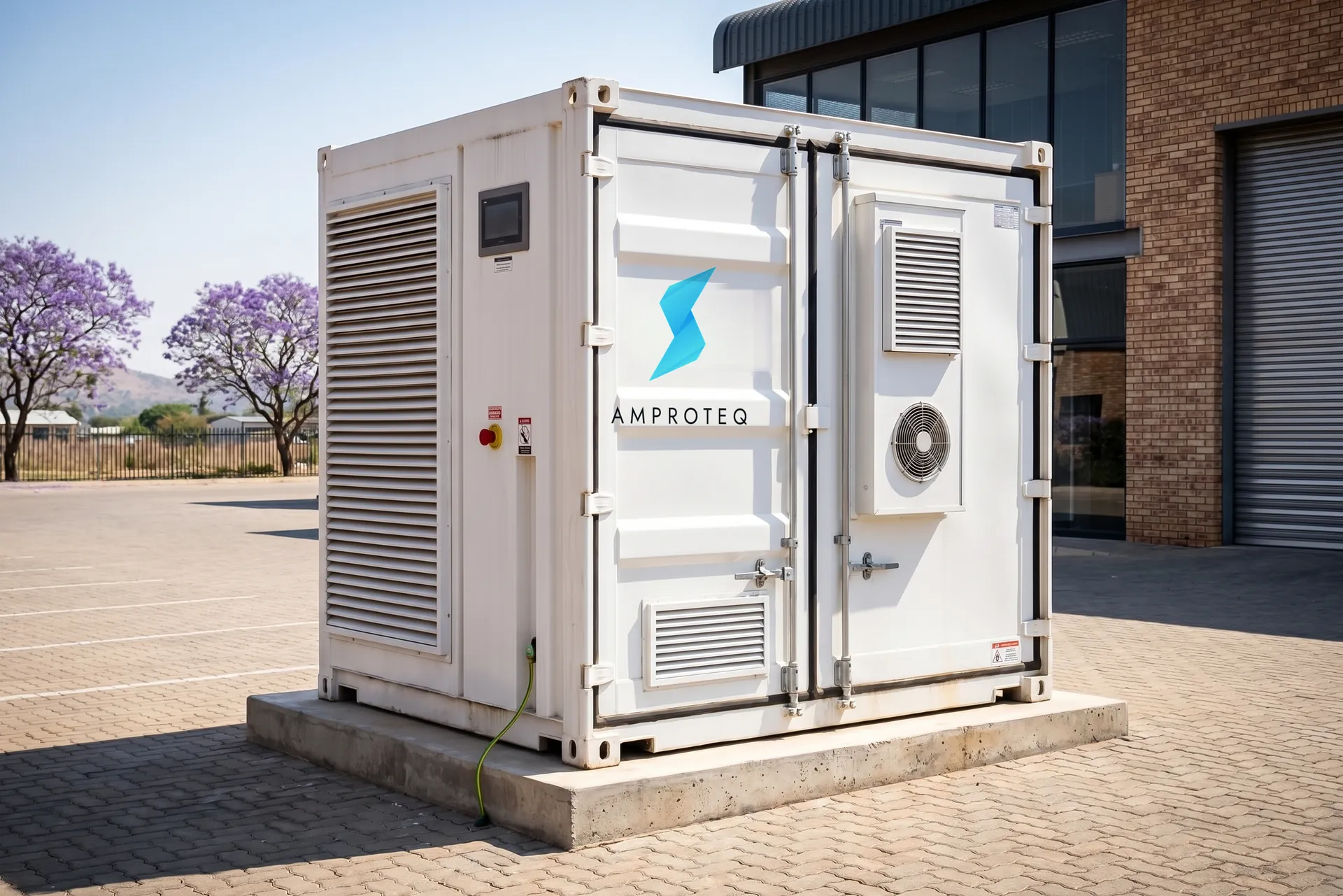
When the network goes away, the site does not have to. A battery plant with a static transfer switch islands the site in under 10 ms and holds it until the grid returns or the generators take over.
01 · How it works
Four steps,
every day.
- 01Detect and transferAn integrated static transfer switch moves the site to island mode in under 10 ms.
- 02Form the gridGrid-forming conversion sets voltage and frequency for the islanded site.
- 03Hold a reserveA reserve floor is held back from daily cycling, sized against the process, not the arbitrage opportunity.
- 04Black startWhere the site has no other source, the battery can energise it from dead.
02 · The numbers
What decides
the value.
| Transfer time | < 10 ms with the static transfer switch |
| Grid modes | On-grid, off-grid and hybrid |
| Reserve | Set per site against the critical load and outage length |
| Pairs with | Peak shifting and demand control on the same battery |
03 · Questions
Asked before
the first meeting.
Can one battery do backup and save money every day?
Yes. Solaris cycles the battery for savings above a reserve floor and keeps the reserve for outages.
Which loads stay on in an outage?
The ones you choose. The critical-load list sets the reserve and the switchgear arrangement.
Does it handle load-shedding schedules?
Yes. Known schedules let Solaris charge ahead of a planned outage so the full reserve is available.
Next step
Start with your meter data.
Twelve months of interval data, your tariff schedule and your notified maximum demand are enough for a first sizing, an indicative capex and a PPA rate, within five working days, at no cost.