 AMPROTEQ
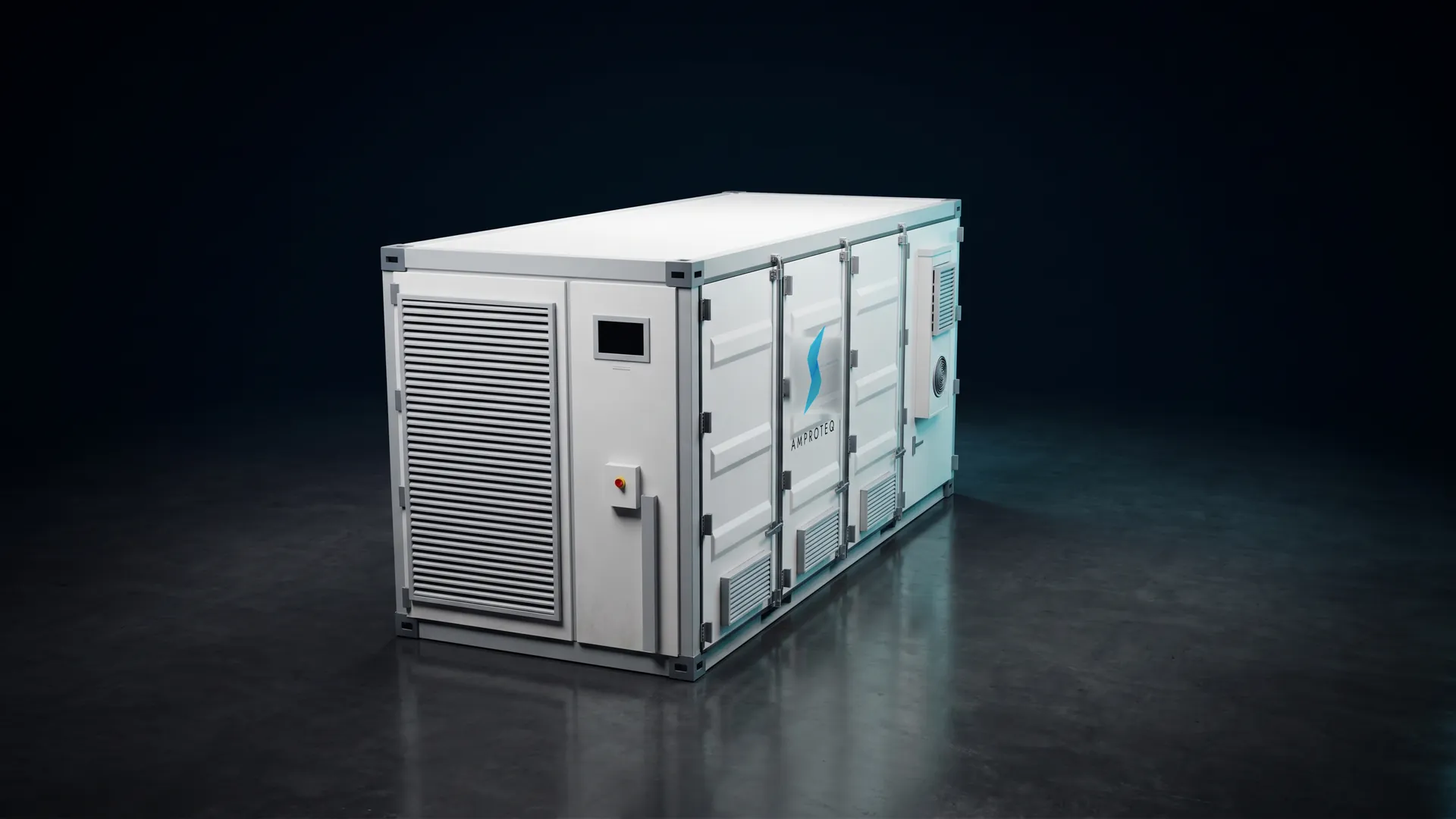
Visualisation
Frequently asked questions
Straight answers before the first call.
The questions energy managers, finance teams and engineers ask us most, answered from the same data we use in proposals.
Which sites is AMPROTEQ for?
Utility and industrial sites where electricity is a material cost and an outage stops production: mines, factories, cold stores, data centres, commercial property and IPP plants. Systems start at 1 MWh and parallel upwards. We do not do residential, rooftop-only solar without storage, or small back-up inverters.
What do you need from us for a proposal?
Twelve months of interval data (30-minute resolution if you have it), your tariff schedule, your notified maximum demand and a short description of the site. From that we return a sizing, an indicative capex and a PPA rate within five working days.
Does the load study cost anything?
No. The first sizing and indicative pricing are free and carry no obligation. If the numbers do not work for your site, we will say so.
Can we buy the electricity instead of the system?
Yes. Under our power purchase agreement AMPROTEQ designs, funds, builds, owns, operates and maintains the plant on your site and you pay for the energy at an agreed rate with a fixed annual escalation, over 10 to 25 years, with no capital outlay.
How does a 25-year PPA work when the battery design life is 20 years?
The battery is designed for 20 years of daily cycling. Where an agreement runs longer, or contracted capacity must hold for the full term, it includes planned augmentation: modules are added or replaced as state of health falls, and that cost is priced into the rate from day one.
Which battery chemistry do you use?
Lithium iron phosphate (LFP) only, in 314 Ah prismatic cells, liquid-cooled and run at 0.5C or below. LFP is thermally stable, contains no cobalt or nickel and has the cycle life a 20-year commercial model needs.
How fast does the battery degrade?
The Systems page publishes the cell manufacturer's measured 20-year test set by dispatch duty. At one full cycle a day and 98 % depth of discharge, the cells reach 80 % state of health in about year 11 and 70 % in about year 19, after roughly 7 000 full cycles.
What round-trip efficiency should we use?
Two figures, on two bases: 94.0 % DC round trip for the battery at beginning of life, and at least 88 % AC to AC for the complete system including conversion and auxiliaries. Our savings models use the AC figure.
Which tariffs does Solaris handle?
Eskom Megaflex, Miniflex and the other time-of-use tariffs, and municipal time-of-use schedules, including seasonal changes, weekday, Saturday and Sunday variants and the notified maximum demand charge.
Will the plant keep us running during load-shedding or a network outage?
Where the site needs it, an integrated static transfer switch moves the plant to island mode in under 10 ms, and grid-forming conversion can black-start the site from the battery. A reserve is held back for that purpose, sized against your process.
What about grid-code compliance?
The interface is designed to NRS 097-2-1 and the South African grid connection code for renewable power plants, and we prepare the grid-code studies and the connection application with the utility.
How is fire safety handled?
Each container has aspirating smoke detection, gas detection and aerosol suppression. Site layout follows the installation manual and NFPA 855 guidance on separation and clearances, and LFP itself has a high thermal-runaway threshold and releases no oxygen.
Can you arrange finance if we buy the plant?
Yes. For well-defined system configurations we can arrange standardised financing with commercial banks, and O&M can be carried under a separate maintenance agreement.
Does the Savings Studio upload our electricity bill?
No. The Savings Studio reads your bill and interval data in your browser. Nothing is sent to us unless you choose to request the proposal report, and then only the contact details you type in.
Something not covered? Ask a director.
Next step
Start with your meter data.
Twelve months of interval data, your tariff schedule and your notified maximum demand are enough for a first sizing, an indicative capex and a PPA rate, within five working days, at no cost.