06:00 – 08:00
The morning peak
Load climbs past 350 kW while the array is still waking up. In June–August that energy costs R7.39/kWh on Megaflex; Solaris carries it on stored energy charged overnight at R1.23.
 AMPROTEQ
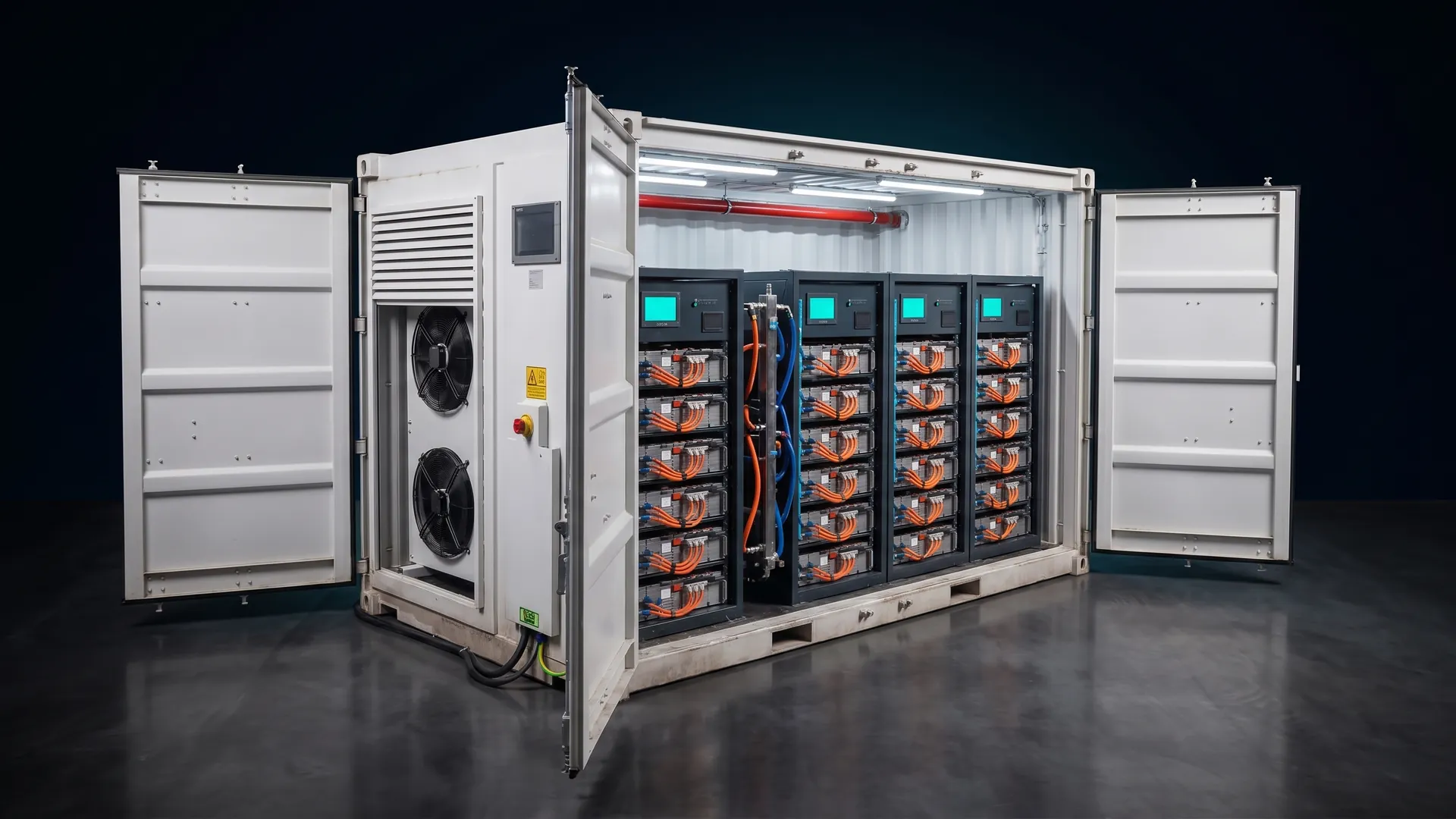
Hardware sets the ceiling. Solaris decides how much of it you actually capture — choosing, continuously, whether the site draws from solar, the battery, the grid or the generator, against your tariff calendar, your notified maximum demand and your state of charge.
This is a measured South African industrial load profile — a double-peaked 24/7 facility with a 430 kW morning peak — paired with a 1 MWp array and a 2 MWh battery. Hover any hour. Toggle the battery out and watch what the peak windows cost.
Tariff: Eskom Megaflex 2026/27, high-demand season (June–August) weekday, active energy below 500 V, transmission zone 0, excluding VAT — R7.39 peak, R1.85 standard, R1.23 off-peak per kWh (Eskom Schedule of Standard Prices 2026/27). Load profile measured; array and battery modelled.
Load climbs past 350 kW while the array is still waking up. In June–August that energy costs R7.39/kWh on Megaflex; Solaris carries it on stored energy charged overnight at R1.23.
The array peaks at 840 kW against a 200 kW load. Exported, that surplus earns a fraction of what the site pays to import energy, so it charges the battery instead of leaving the site.
Load rises again as generation collapses. This is the most expensive energy on the tariff and it is met entirely from the battery, holding notified maximum demand flat.
A microgrid is a group of interconnected loads and distributed energy resources that behaves, from the network's point of view, as a single controllable entity. Solaris is what makes that true — it is the only element that sees the tariff, the array, the state of charge, the generator and the load at the same time.
It can operate grid-connected or islanded, and transition between the two without the site noticing. Eskom becomes one input among several rather than the only one.
Every kilowatt-hour generated on site is consumed on site before anything is imported or exported.
The battery absorbs surplus and releases it into the windows where energy is most expensive.
Imports are pushed into off-peak hours and held below the notified maximum demand ceiling.
Thermal generation is an emergency resource, not a daily one. On hybrid sites fuel burn drops sharply.
Solaris sits between the distributed energy resources and the site. It measures at the point of connection, forecasts generation and load, and dispatches every resource against the tariff calendar.
Not a schedule. A continuously re-evaluated optimisation against the constraints that actually determine your bill.
The Eskom Megaflex and municipal time-of-use calendars are loaded per site, including seasonal rate changes and weekday/Saturday/Sunday variants. Solaris moves consumption down the rate card wherever the battery has the headroom to do it.
Notified maximum demand is charged on the highest half-hour of the month. Solaris watches the rolling demand integral and discharges pre-emptively to stop a single production event resetting your charge for the next twelve months.
State-of-charge windows, C-rate limits, cell temperature spread and cycle budget are hard constraints. The optimiser will forgo a marginal saving rather than spend warranty life to capture it.
A reserve floor is held back for continuity of operations. On sites where a network event stops production, that reserve is sized against the process, not against the arbitrage opportunity.
Generation and load are forecast a day ahead and re-forecast intraday. A cloudy morning changes the overnight charging decision made the night before.
Export limits, power factor targets and grid-code obligations at the point of connection are enforced as constraints, so the plant never optimises itself out of compliance.
Solaris ships with the full control stack enabled from day one. Your plant is configured for the value it captures today — and it is already capable of the rest, so a change in tariff structure or grid code is a configuration change, not a new procurement.
Buying and storing energy when it is cheap, releasing it when it is expensive, against the loaded tariff calendar.
EnabledMoving demand out of the weekday peak windows entirely: 06:00–08:00 and 17:00–20:00 in June–August, 07:00–09:00 and 18:00–21:00 the rest of the year.
EnabledCoordinating PV, storage, grid and thermal generation as one dispatchable portfolio.
EnabledFour-quadrant conversion supplying reactive power locally, avoiding utility power-factor penalties.
EnabledSmoothing intermittent PV output into a firm, contractable profile at the point of connection.
EnabledDeferring a network or transformer upgrade by holding demand below the existing connection capacity.
EnabledLocal voltage regulation at the point of connection, particularly on long or weak rural feeders.
EnabledSub-second active-power response to system frequency deviation — the fastest-acting resource on any network it is connected to.
EnabledAbsorbing and delivering steep ramps that thermal plant cannot follow, smoothing the connection point in both directions.
EnabledSouth Africa's electricity market is opening — wheeling, trading and network services are all moving. Every system we deliver is specified so that when those revenues become available to you, the plant is already able to earn them.
Solaris integrates into the site SCADA, building management and metering you already run rather than replacing it. Open protocols, revenue-grade metering at the point of connection, and cell-level telemetry all the way down.
| Interfaces | |
|---|---|
| Site SCADA | Modbus TCP / RTU |
| Utility / protection | IEC 60870-5-104, IEC 61850 |
| Local bus | CAN, RS-485 |
| Remote link | Ethernet, 4G/LTE failover |
| Metering | Revenue-grade at point of connection |
| Telemetry depth | Cell-level voltage & temperature |
Send us twelve months of interval data and your tariff schedule and we will run this same model against your site — hour by hour, at your rates, with the storage sized to your peaks.